Journal — Three entries

Notes from
the atelier.

Written slowly, published rarely. Essays on the making, keeping and wearing of the things we make.

I — Notes from the atelier

September 2026 — 6 min

On the line

Every garment we make begins as a single pencil line on a sheet of pattern paper. Everything else is a negotiation with that line.
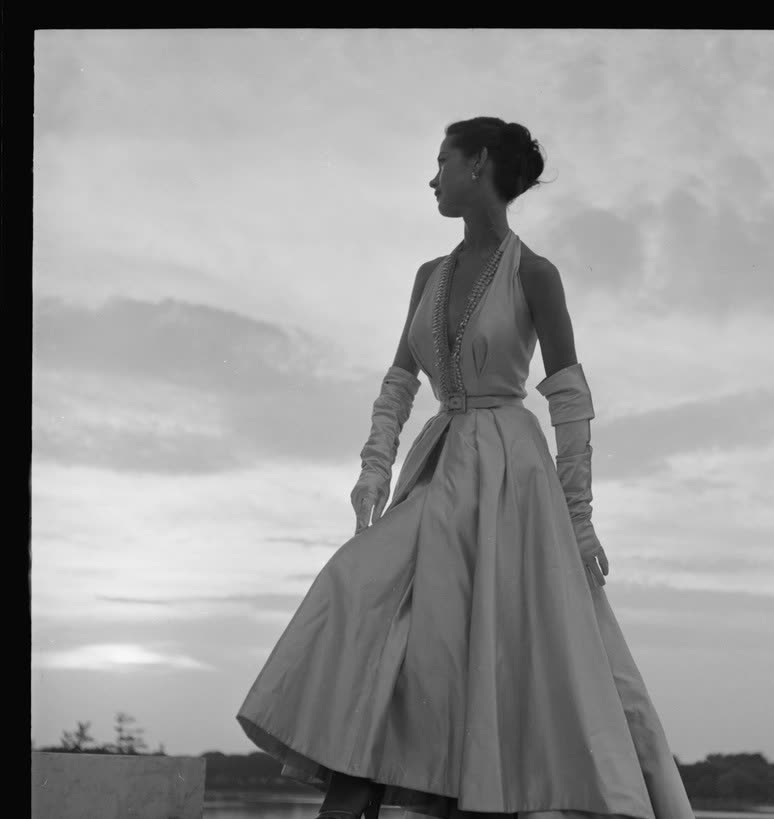
Black and white photograph of a model in a halter evening gown and long gloves against an evening sky

There is a moment, early in the making of any coat, when the pattern-cutter draws the first line and then stops. It is a long, slow stroke from the point of the shoulder to the hem, and it decides almost everything: how the cloth will fall, where the weight will sit, whether the wearer will look taller or simply longer. We have come to believe that this pause is the whole of our work. The line either has quiet in it or it does not.

Most fashion is made by addition. A collar is added, then a pocket, then a belt to justify the pocket, and so on until the object is a list of decisions rather than a single one. We try to work the other way. We start with the most complete version of the garment we can imagine and remove things from it until removing one more thing would make it less itself. The Column Coat lost its buttons this way. It lost its lining. What remained was a line.

This is not minimalism as a style, though it is often mistaken for one. It is closer to a discipline, a way of asking each seam to justify its presence. When a seam cannot, it goes. When it can, we make it as beautifully as we know how, because it will be one of very few.

We start with the most complete version of the garment we can imagine and remove things until removing one more would make it less itself.

The atelier is a low room with north light and a long table. On the table are the toiles for the season, cut in unbleached calico and pinned to a form. Each is numbered in pencil in the corner, the same way the finished pieces are numbered on this site, because we do not believe a garment should carry a name until it has earned one.

There is a kind of pleasure in this that is difficult to explain to people who have not done it. It is the pleasure of a sentence with no unnecessary word in it. Of a room with one chair. The pleasure, we suppose, of the line.

— The atelier
II — Autumn / Winter 2026

August 2026 — 5 min

A winter in black

For the new season we have permitted ourselves a single colour beyond our usual three. It is called oxblood, and it appears on exactly four pieces.

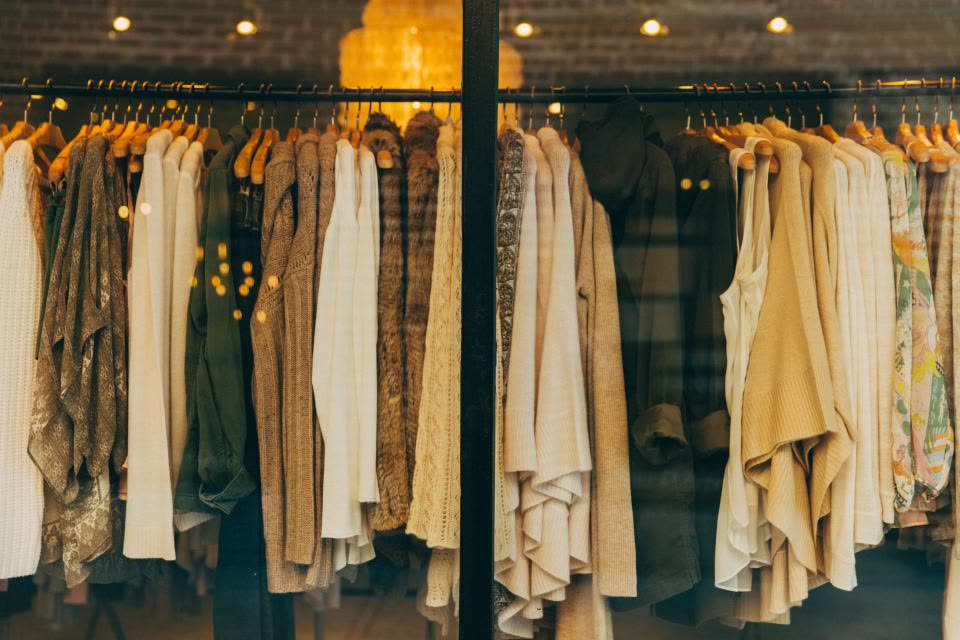
A rail of coats and knits in cream, camel and olive seen through a shop window

People sometimes ask why a house that works almost entirely in black, ivory and stone bothers to talk about colour at all. The honest answer is that we think about it constantly. When the palette is this narrow, the introduction of a single new tone is not a detail. It is an event. It changes the temperature of everything that stands beside it.

This season the colour is oxblood, a dark, slightly brown red that we found in a bolt of 1960s Italian upholstery wool and spent eleven months trying to match in a modern cloth. It is not a bright colour. In some lights it reads as black. It is most alive in the fold of a sleeve, or on the inside of a lapel, where it is only seen by the person wearing it.

We have used it on the Atelier Cardigan, the Halter Column, the Ledger Tote and the Fold Clutch. Nowhere else. A word of colour in a paragraph of black.

When the palette is this narrow, the introduction of a single new tone is not a detail. It is an event.

The rest of the collection is winter as we understand it: heavy, quiet, close to the body. Double-faced wool, brushed alpaca, two-ply cashmere. Trousers that break once. Coats with no visible closures. A dress cut on the bias so that it moves before you do.

It is showing now, in the atelier and in the pages of this site. We hope you find something in it that you will keep for a very long time.

— The atelier

III — On keeping things

June 2026 — 4 min

Care as a practice

The most sustainable garment is the one you already own. A short, practical essay on making it last.

We are asked, more and more, what we are doing about sustainability. The question deserves a serious answer, and ours is unglamorous: we make fewer things, we make them well, and we teach people how to keep them. The third part is the one that gets the least attention, so we will give it some here.

Wool does not want to be washed. It wants to be aired. Hang a coat by an open window for an afternoon and it will forget most of what happened to it. Brush it with a natural-bristle garment brush, in the direction of the nap, and it will forget the rest. Send it to a dry cleaner once a year at most, and only to one who will let you watch.

Cashmere should be washed by hand in cold water with a little neutral soap, pressed (never wrung) between two towels, and dried flat, reshaped. It will pill in the first weeks. This is not a fault; it is the shorter fibres leaving. Comb them away with a cashmere comb and the garment will be softer, and stronger, than the day you bought it.

Wool does not want to be washed. It wants to be aired.

Leather asks for even less. Keep it out of the sun. Feed it twice a year with a balm that smells of nothing. Let it mark. The marks are the point.

Every piece we sell can be returned to the atelier for repair, at any age, for as long as the house exists. Loose buttons, worn hems, a lining that has given up: these are not the end of a garment. They are the middle.

— The atelier